24K vs 18K vs 9K Gold: How Purity Affects Scrap Gold Value
By Top Gold · 8 October 2025
Karat tells you how much of a piece is actual gold, not how heavy it is or how nice it looks. It’s the first number we check, and it usually matters more to the final price than anything else about the item.
What the numbers mean
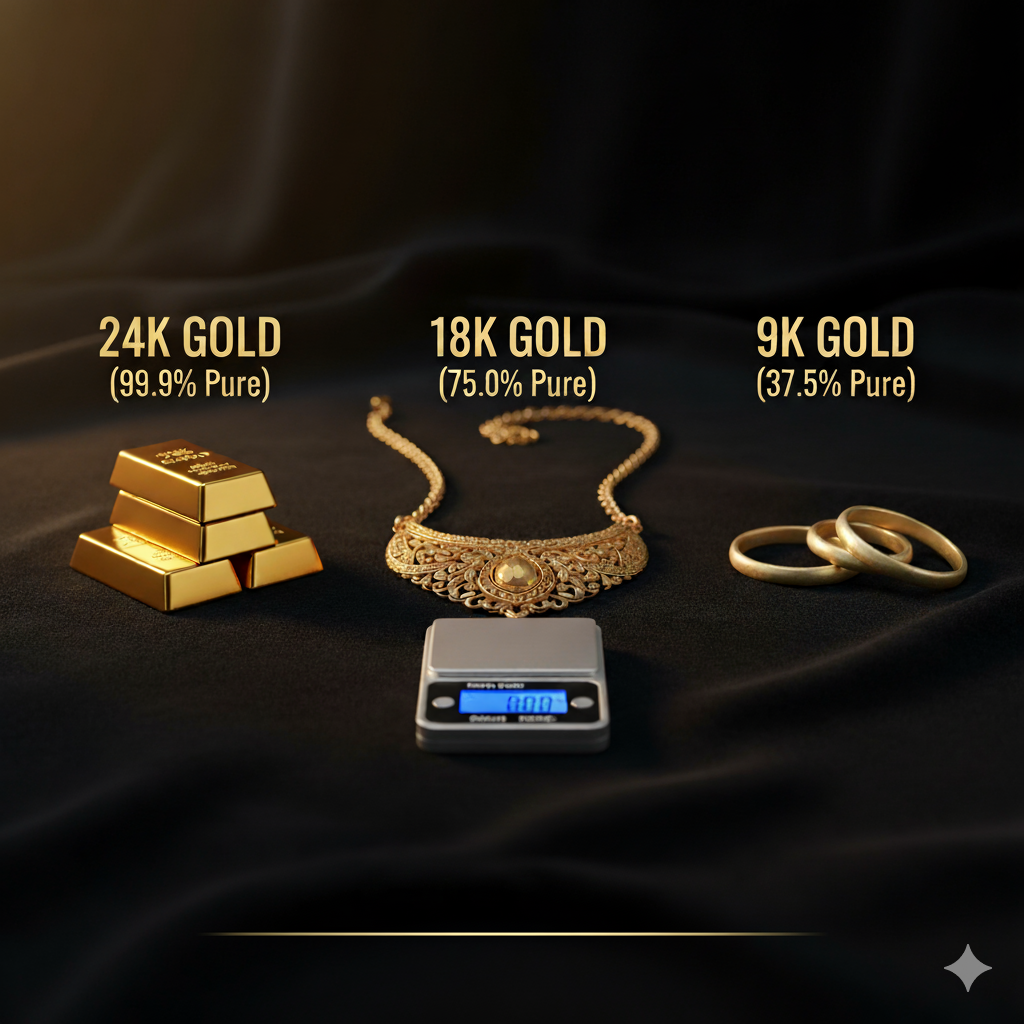
Karat is a fraction out of 24. Pure gold is 24 parts gold out of 24, which is why it’s labelled 24K.
- 24K is 99.9% gold. Soft, rarely used in everyday jewellery because it dents and scratches easily. More common in bars and some coins.
- 22K is 91.6% gold. Still soft for daily wear but common in some cultural jewellery traditions where a warmer, richer gold colour is preferred.
- 18K is 75% gold. A common choice for engagement rings and higher-end jewellery, balancing gold content with durability.
- 14K is 58.3% gold. Popular in the US and increasingly in Australia, tougher than 18K and more affordable.
- 9K is 37.5% gold, the legal minimum to be called “gold” in Australia and the UK. Durable and cheap to produce, but well under half gold by weight.
Why this changes the payout so much
Take two identical-looking 10 gram rings. One is 18K, the other is 9K. The 18K ring contains 7.5 grams of actual gold. The 9K ring contains 3.75 grams. That’s a difference of exactly double, even though the rings might look the same on a shelf and neither one tells you this just by looking at it.
This is exactly why we don’t estimate karat by eye or trust the stamp alone. Stamps rub off, get mismatched during repairs, or in rare cases aren’t accurate to begin with. We test every item with X-ray fluorescence (XRF) technology, which reads the actual composition of the metal, and we do it while you watch.
A common misunderstanding
People sometimes assume higher karat always means a better buy-back deal, and it’s true in terms of pure metal content. But 18K and 22K jewellery also tends to be softer and shows wear faster, which is part of why 9K and 14K remain popular for everyday pieces. Neither is “better” in absolute terms. They’re suited to different uses, and the karat number just tells us how much gold is actually in the piece you’re selling.
Mixed karat items
Chains with mixed-karat clasps, multi-tone jewellery, or pieces that have been repaired with different gold over the years are common. We test different sections separately where needed rather than averaging the whole piece, so you’re not underpaid for a higher-karat section or overpaid in a way that gets corrected later.
Want to know the exact karat and weight of something you own? Bring it in for a free X-ray fluorescence (XRF) test. Contact us to arrange a visit.
Checking your gold’s purity in Sydney
Stamps like 375, 585, 750 and 916 tell you roughly what a piece should be, but they’re not proof. At both Top Gold stores, in Ryde and Hurstville, every item is X-ray fluorescence (XRF) tested in front of you, so you see the actual gold percentage before you get an offer. That matters most for 22ct and 24ct jewellery, where a small difference in purity makes a big difference to the payout.
You can compare today’s rates for each purity on our live payout table.
FAQs
Is 22ct gold worth more than 18ct?
Yes. 22ct is about 91.6% gold, while 18ct is 75%, so for the same weight 22ct contains roughly 22% more gold and is worth more as scrap.
Why is 9ct gold worth so much less?
9ct is only 37.5% gold. The rest is alloy metal, which has little resale value, so the payout per gram is well under half of 24ct.
Can you test gold that has no stamp?
Yes. X-ray fluorescence (XRF) testing reads the metal itself, so unstamped, worn or repaired pieces can be valued accurately.
Sell gold near you
Gold buyers serving Sydney suburbs including:
Get a Price Estimate